
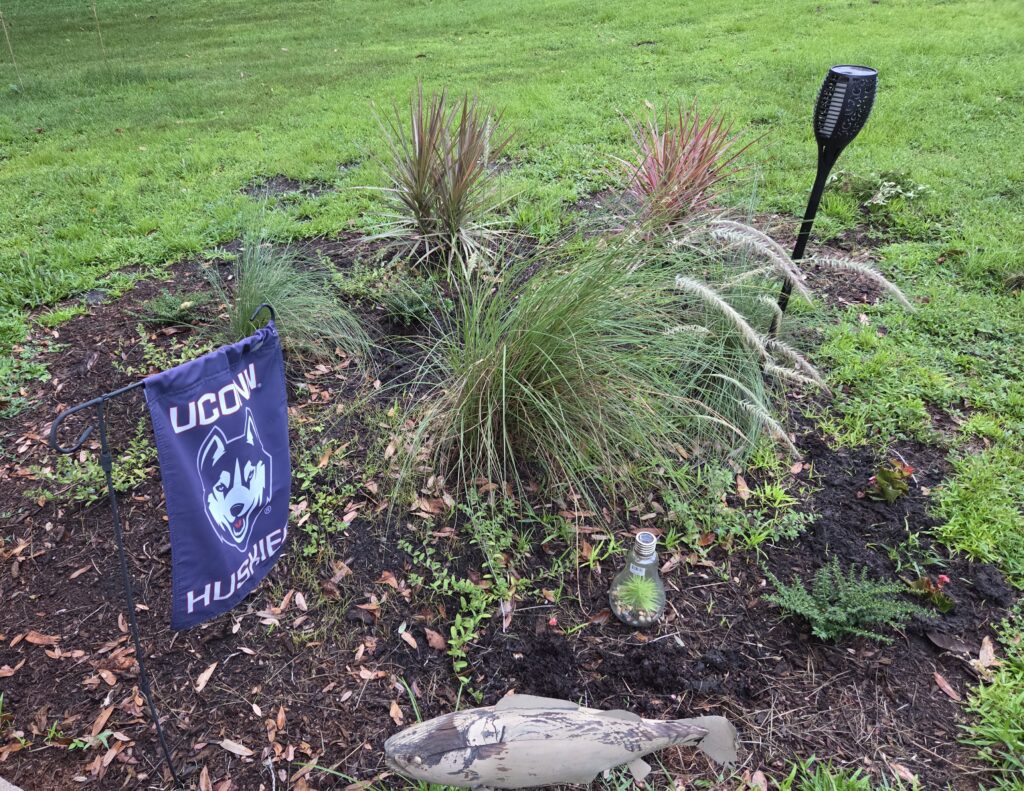
I took a few days off this past week to spend some time with some very good friends in New England. I am posting from the Manchester-Boston Regional Airport on a cool overcast morning. While up here I’ve loved viewing the beautiful older homes surrounded by gardens filled with native flowers and hard wood forests, hilly terrain and rock ledges that you don’t see in Florida. It’s also fun to have spent time with some friends I’ve known for nearly 50 years. Nothing like “old friends” for reminiscing and lots of laughs.
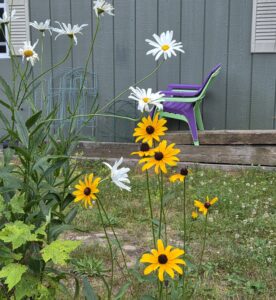

I’ve been taking photos of the gardens I’d love to recreate back home, but some things just grow better elsewhere. Before I left Northeast Florida on Tuesday, I took some photos of the “pocket” gardens I’ve created in areas on our property where grass seems reluctant to grow. We’ve had several large trees removed and the remaining stumps that have been grinded have created patches of ground infused with layers of wood chips. Even with some vigorous raking and the adding of garden soil, grass seed just doesn’t seem to take.
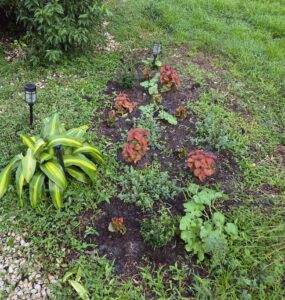
Instead of fighting a losing battle with these patches, I go with the flow, filling them with ground cover plantings, ornamental grass and shade loving plants like hardy Coleus. It’s been a rewarding to see things take root and thrive in a way that suits their conditions.
I was recently reading about the concept of Chaos Gardening on the University of Connecticut website. As a UCONN Grad, the article had a nostalgic element. According to the site, ‘Chaos Gardening is a growing social media trend that encourages gardeners to relinquish control, scatter assorted seeds, step back, and see what happens.’
This approach replaces the careful spacing and planning of a traditional garden. By randomly tossing seeds and letting nature do its thing, the results can vary widely ranging from an surprising mix of assorted plants to what the site calls a “patch of disappointment.”
For those of us who’ve been through the chaos created by traumatic events, however, we want to feel like we can have some semblance of control as we plant seeds of hope for our future. I appreciated that some of the advice given for successful Chaos Gardening can be applied to those widowed persons trying to move forward while hoping to avoid those so called patches of disappointment.
For better chances of gardening success it’s advised to group those seeds together that share similar sun and water needs. Conversely, we often hear that widowed people grow stronger by spending time with those with similar emotional needs.

Chaos gardeners are adivsed to ensure seeds make contact with the soil. Like those seeds we sometimes need to feel secure and grounded to grow. By choosing resilient plants that handle regional conditions and identifying and removing weeds and invasive species, attentive gardeners ensure those seeds have a better chance of sprouting amid a positive environment.
I think most of us can relate that information to our own emotional gardens.
Having faith and trusting in life as it unfolds and creating conditions to achieve positive outcomes, weeding out what no longer works for us or can be damaging, staying grounded and having patience to spout new life, and seeking groups and individuals that can lend support we can become successful chaos master gardeners of our own ways forward.
Like those “patches of disappointment” in my own backyard, I hope we can find ways to encourage new growth despite the challenges we face.
As I am about to board a plane for home, I wish you all flourishing gardens and a great weekend.